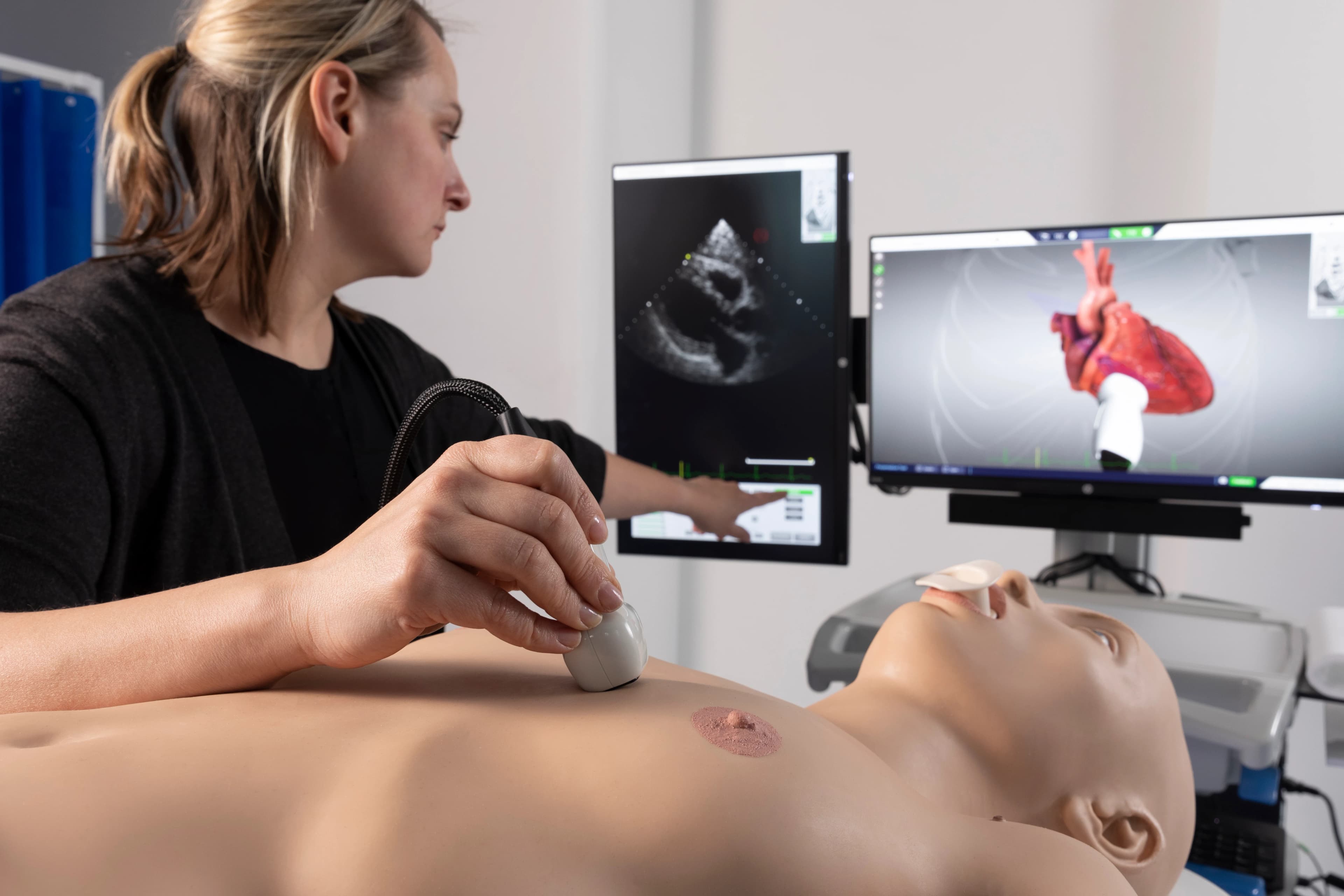
POCUS has a teaching difficulty that is not technical but a matter of timing: the case a resident needs to see does not appear while they are on shift. Cardiac tamponade, pneumothorax, free fluid in the abdomen. These are exactly the findings that decide management, and the ones least likely to turn up in a rotation.
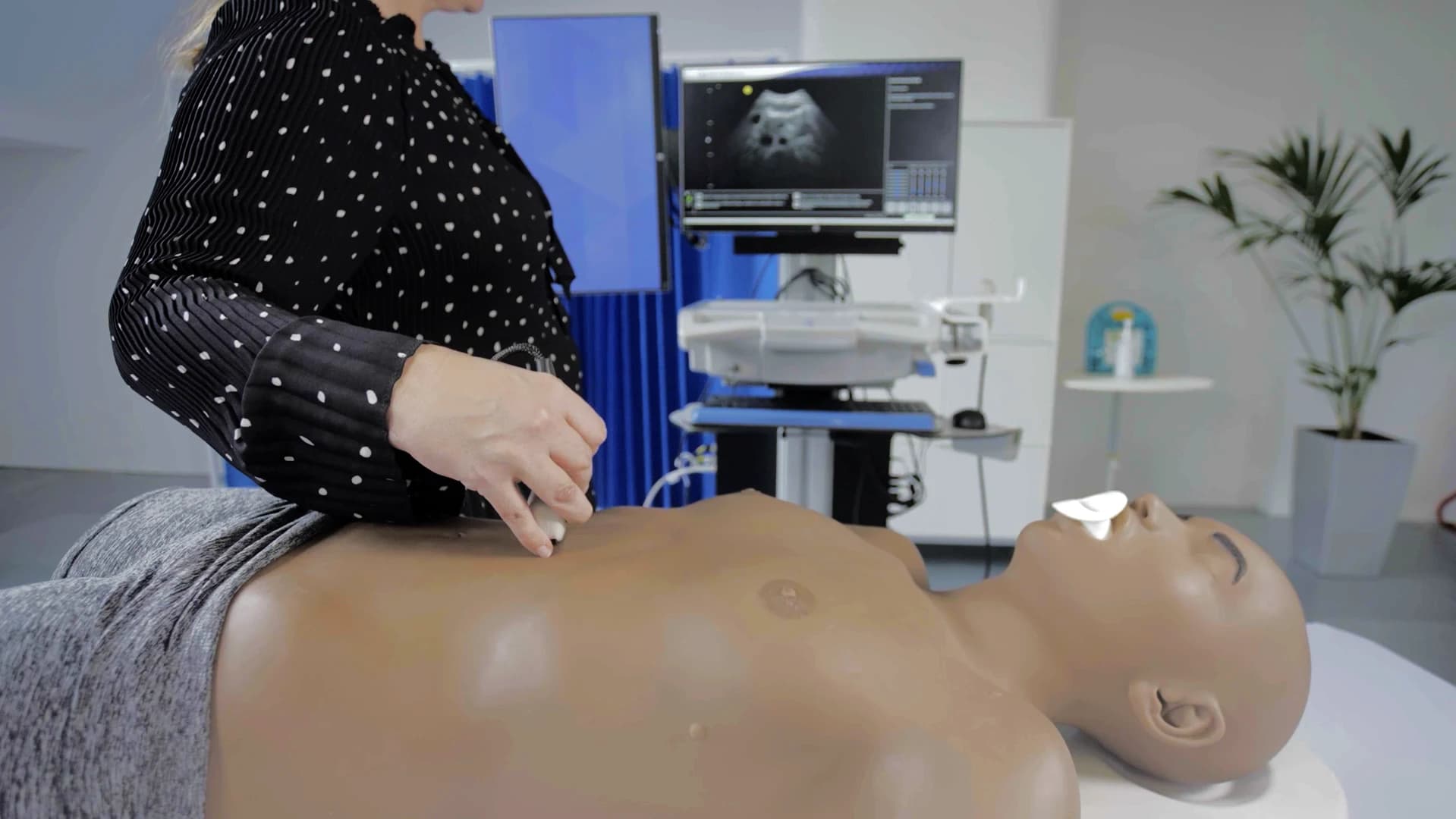
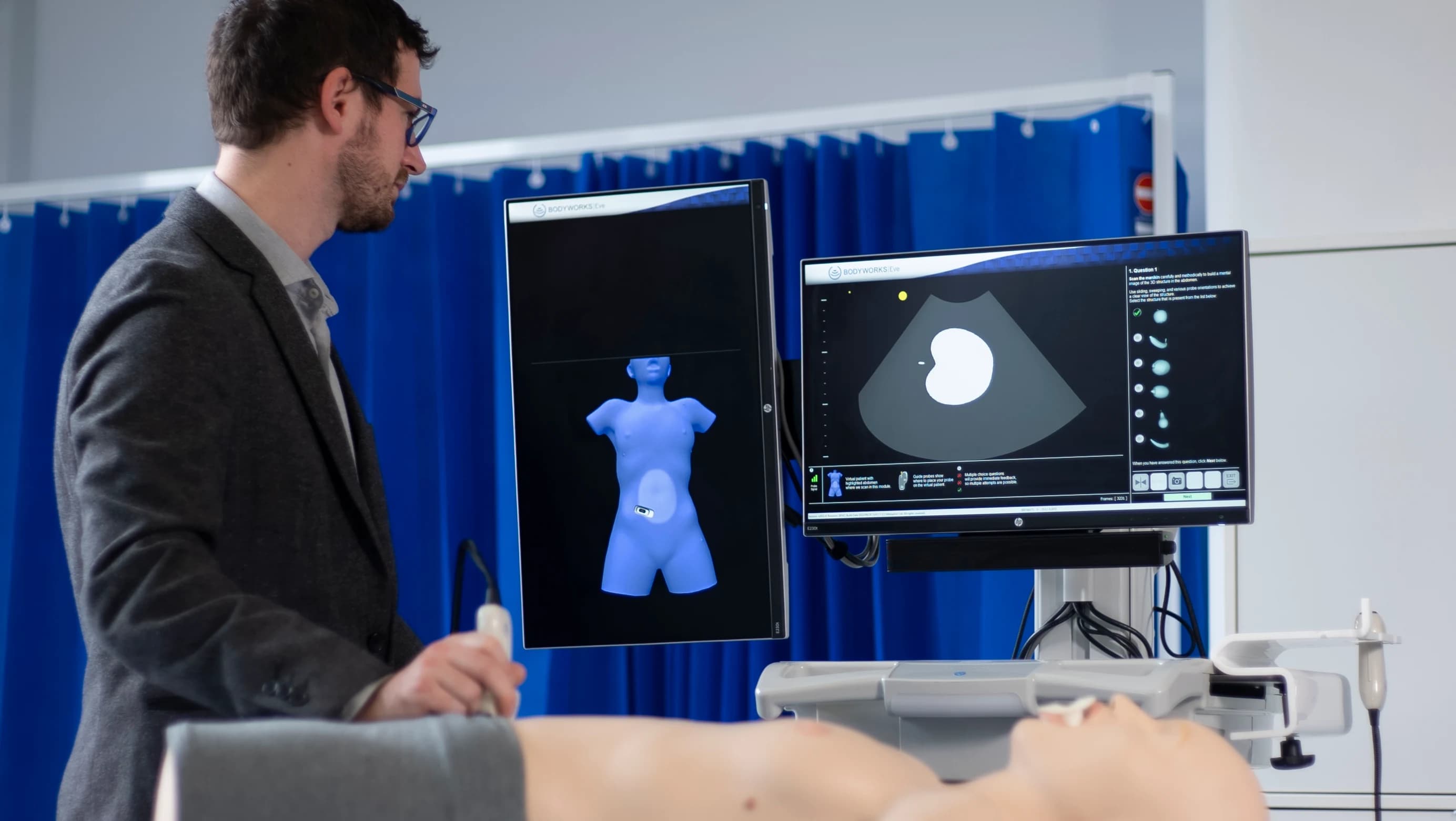
BodyWorks Eve reverses that. The library holds over 100 patient cases and over 10,000 pathology variations, all derived from real scans, and any of them can be put on the table now. The trainee scans the manikin as they would a patient, with palpable landmarks and a seamless transition between the cardiac and abdominal probes.
The instructor tablet is the other half. During the examination the instructor changes the pathology, heart rate, respiratory rate and severity. The trainee is not answering a fixed case: they are answering a patient who changes, which is what tests decision-making rather than image recognition alone.
Scanning runs from the neck to the pubic bone and reaches the posterior flanks, covering cardiac, lung, transabdominal and pelvic ultrasound.