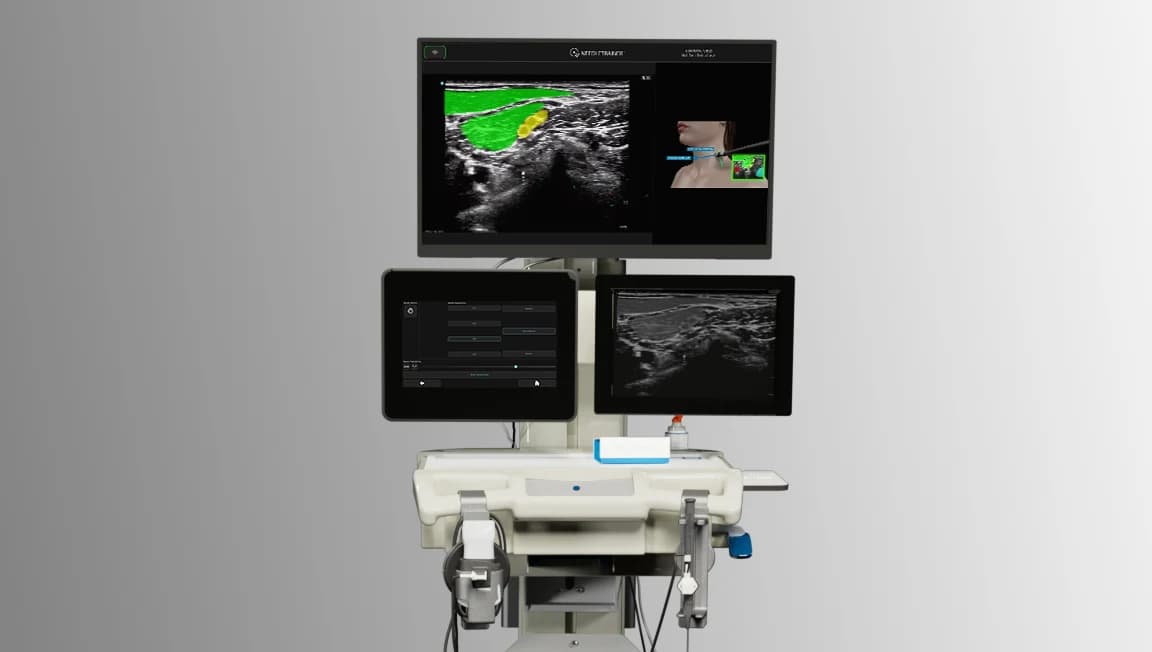
Of the five simulators in this line, NeedleTrainer is the only one that does not simulate the patient. It simulates the needle.
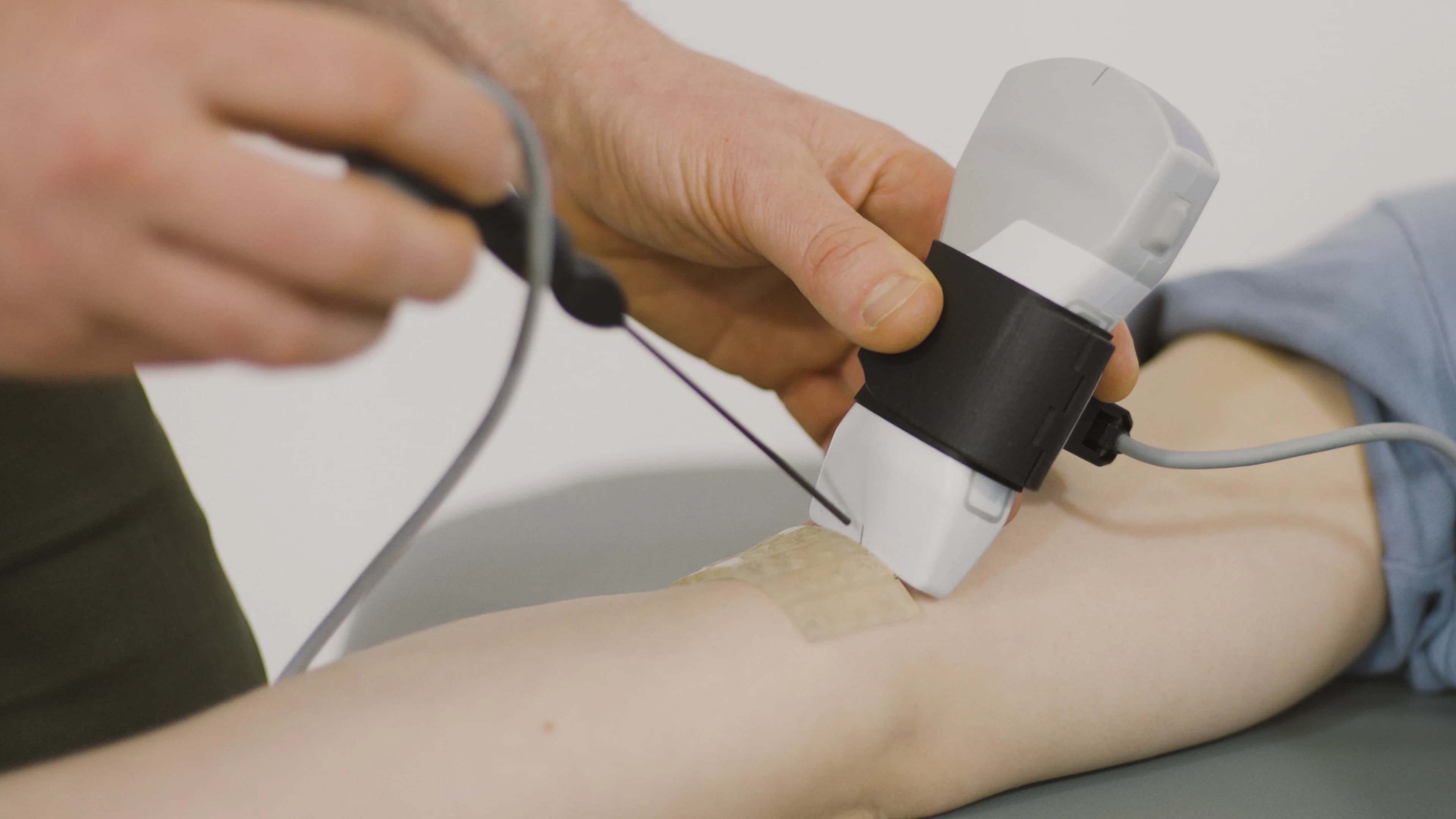
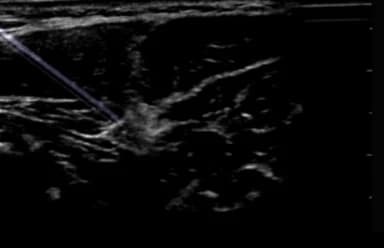
Training in guided needling always meets the same limit: either you practise on a phantom, which has nobody's anatomy, or you practise on the patient. NeedleTrainer cuts the knot from the other side. The participant is a real person, with their own anatomy; the probe is the department's, and the image is the one that machine produces. What is simulated is only what would cause harm: the needle withdraws into the body of the device instead of entering, and the system draws on screen where it would be.
That changes what is learned. The difficulty of a guided block is not in advancing the needle: it is in keeping tip and beam in the same plane while the hand holding the probe is also moving. That coordination only exists when there is a patient with a pulse, breathing, and tissue that shifts.
The needle comes in three lengths, 40, 84 and 120 mm, and its gauge and echogenicity are configurable. The system measures needle visualisation, which gives the instructor a figure about the gesture rather than only an impression.